

Selling firearms and related products online brings a level of scrutiny most retailers never face. Payment processors watch closely. Buyers carry hesitation. Regulators expect precision. Each checkout error or policy gap adds friction that quietly drains revenue.
Compliance is not paperwork alone. It shapes how buyers move through your site, how banks assess risk, and how disputes unfold weeks after delivery. Stores that treat compliance as part of the buying experience tend to see steadier conversions and fewer chargebacks.
This article focuses on the money path. The goal stays simple. Keep legitimate buyers moving while protecting the business from disputes and payment blocks.
Why Carts Fail In Firearms Ecommerce
Many abandoned carts trace back to uncertainty rather than price. Firearms buyers pause when something feels unclear or risky.
Common friction points include
- Unclear shipping rules for firearms and ammunition
- Payment rejections without explanation
- Surprise verification steps late in checkout
- Missing or vague policy pages
When buyers reach checkout, doubt becomes expensive. A failed payment or unexpected hold often ends the session for good.
These are the main causes behind checkout failure.
Payment Declines Triggered By Category Risk
Firearms transactions receive higher scrutiny from banks. Even valid cards may fail if the processor flags the merchant or transaction flow.
Declines rise when
- Billing descriptors lack clarity
- Transaction amounts differ from expectations
- Payment pages appear inconsistent with the rest of the site
Clear labeling and consistent branding help processors and buyers feel more confident.
Missing Context At The Moment Of Purchase
Buyers want certainty before submitting payment. If age rules, FFL transfer steps, or shipping limits appear after payment, frustration follows.
Clear guidance before checkout reduces exits and refunds.
Payment Processing Without Scaring Buyers
Payment rules matter, but buyers should not feel interrogated. Transparency works better than warnings.
Here are the elements that help payments flow smoothly.
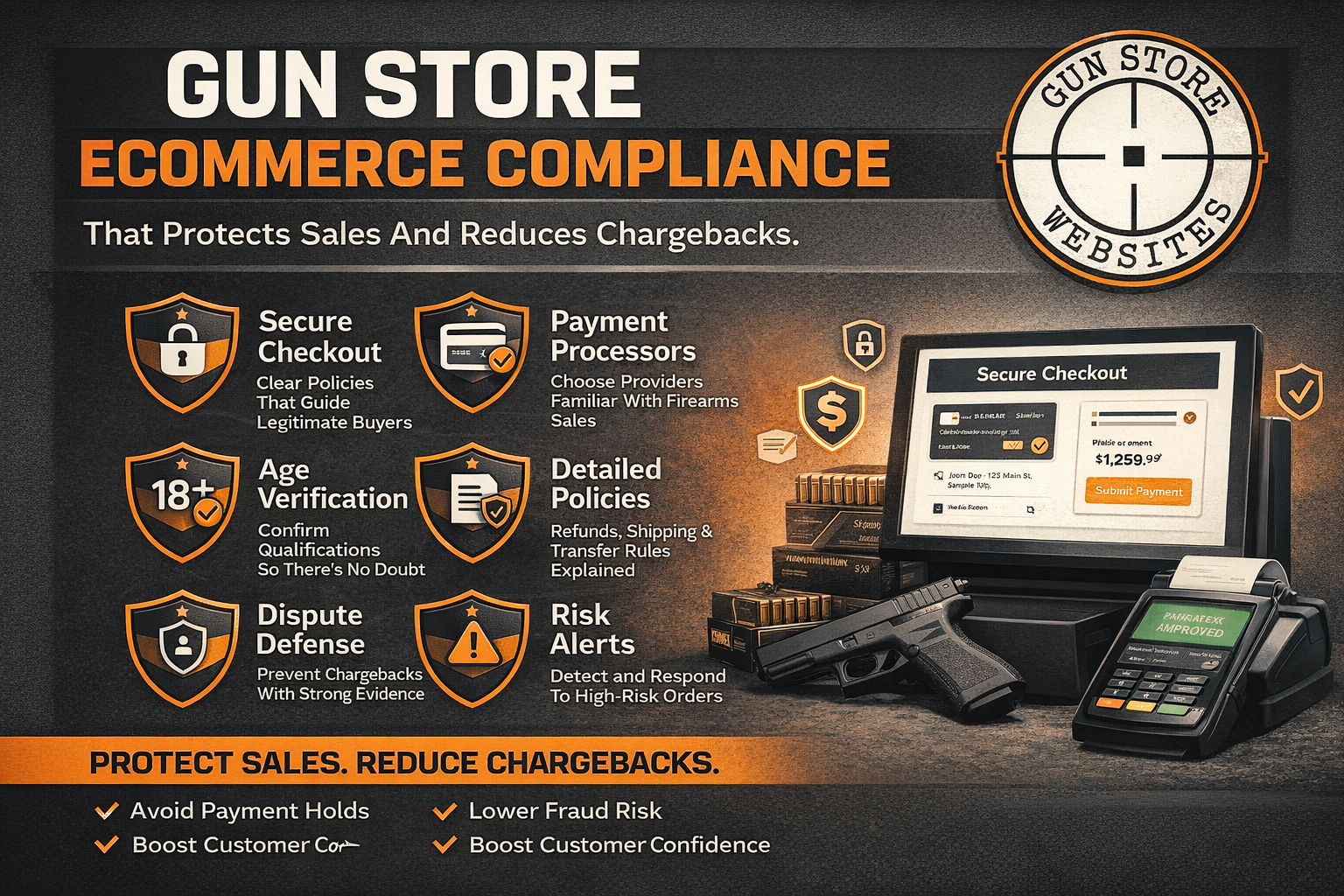
Choose Processors Familiar With Firearms Retail
Not all processors treat firearms equally. Those with category experience tend to flag fewer transactions and resolve issues faster.
Processor selection influences
- Approval rates
- Settlement delays
- Dispute handling outcomes
A processor unfamiliar with firearms often introduces delays that buyers misread as site errors.
Present Payment Limits Early
If certain cards, wallets, or amounts trigger restrictions, state this before checkout begins. Surprises cause exits.
Short notices near the cart perform better than dense policy pages.
Match Checkout Design With Brand Identity
Sudden design changes at payment pages raise suspicion. A checkout that feels disconnected from the rest of the site reduces trust.
Consistent fonts, colours, and tone signal legitimacy to buyers and banks.
Policy Pages That Support Conversion And Dispute Defense
Policies protect more than compliance. They act as evidence during chargebacks and refunds.
These are the policy pages that matter most.
Required Core Policies
Every firearms ecommerce site should clearly publish
- Refund and return policy
- Shipping and transfer policy
- Age and identity requirements
- Terms of service
Each page should use plain language. Legal phrasing adds risk when buyers misunderstand terms.
Placement That Buyers Actually Read
Policies buried in footers fail both buyers and banks. Strategic placement improves clarity.
Effective placements include
- Links near the add to cart button
- Short summaries within checkout steps
- Confirmation emails with policy reminders
Policy Language That Reduces Disputes
Chargebacks often cite unclear expectations. Policy wording should answer common disputes before they occur.
Focus on
- Delivery timelines
- Transfer responsibility
- Non refundable items
- Restocking conditions
Avoid vague phrases. Precision protects revenue.
Checkout UX That Keeps Buyers Moving
Checkout flow design shapes both conversion and risk. Fewer steps do not always mean better results.
These are the components that support smooth completion.
Clear Step Progression
Buyers should know how many steps remain. Ambiguity increases exits.
A simple progress indicator reduces hesitation.
Form Fields With Purpose
Each field should justify its presence. Extra data collection raises suspicion.
Keep focus on
- Billing accuracy
- Transfer details
- Legal confirmation
Avoid unrelated marketing fields during payment.
Inline Error Messaging
Generic errors cause panic. Specific guidance builds trust.
Replace vague alerts with messages that explain
- What failed
- Why it failed
- What action fixes it
Order Verification Without Punishing Real Customers
Verification protects against fraud, yet heavy handed checks drive away legitimate buyers.
Balance remains key.
Risk Based Review Instead Of Blanket Holds
Not every order needs review. Apply checks based on transaction signals.
Common signals include
- Unusual shipping addresses
- Mismatched billing details
- High value orders
Low risk orders should flow through without delay.
Communication During Verification
Silence creates distrust. Buyers assume the worst when orders pause.
A short confirmation message helps
- Explain the review step
- Set timing expectations
- Reduce support tickets
Manual Review Workflow Table
| Review Trigger | Action Taken | Buyer Notification |
| Address mismatch | Manual verification | Email within one hour |
| High order value | ID confirmation | Checkout confirmation notice |
| First time buyer | FFL validation | Order status update |
Post Purchase Messaging That Reduces Chargebacks
The sale does not end at payment confirmation. Chargebacks often occur days later due to confusion.
Strong post purchase communication prevents many disputes.
Confirmation Emails With Purpose
Confirmation messages should restate
- What was purchased
- What happens next
- Expected timelines
Avoid vague promises. Clear steps calm buyers.
Shipping And Transfer Updates
Delayed updates cause buyers to contact banks instead of stores.
Automated messages reduce this risk by sharing
- Tracking status
- Transfer confirmation
- Pickup instructions
Support Access That Feels Human
Easy support access lowers chargeback rates. Buyers choose banks when they cannot reach merchants.
Display
- Support email
- Response timeframe
- Clear issue categories
Measuring Success Without Guesswork
Compliance improvements should connect to outcomes. Track metrics that reflect buyer confidence.
Key indicators include
- Payment approval rate
- Chargeback ratio
- Checkout abandonment rate
- Support ticket volume
Changes in these areas reveal which updates matter most.
Final Thoughts On Compliance And Revenue Protection
Compliance does not need to slow sales. When handled with clarity and intent, it supports trust, smoother payments, and fewer disputes.
Gun stores that integrate rules into the buying experience protect revenue without adding friction. The result shows up quietly through steadier approvals, fewer chargebacks, and buyers who complete checkout with confidence.